72%
are stuck in the developing stage
Solid processes and a clear strategy are in place, but concrete AI implementation is missing.
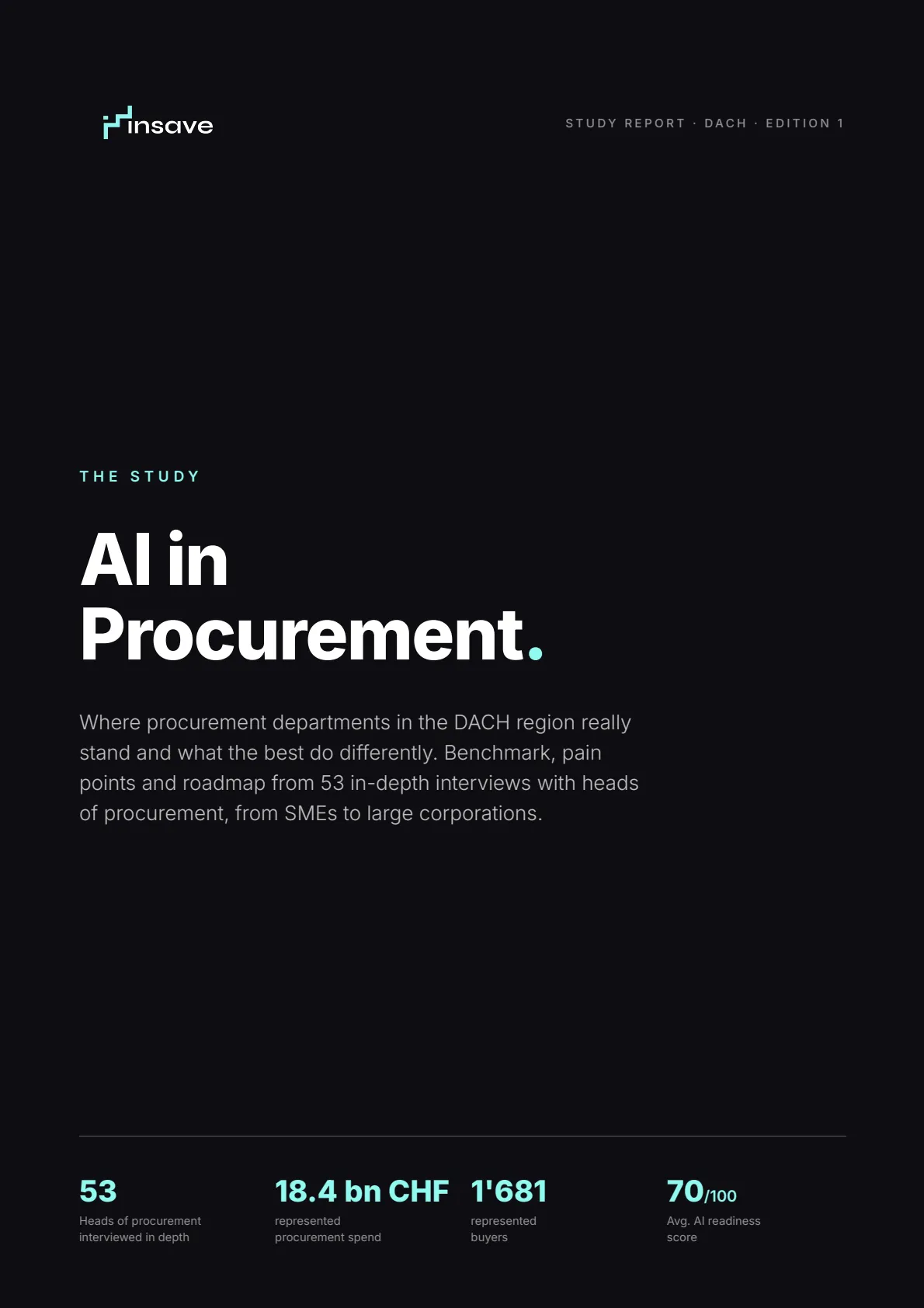
Study report · DACH · Edition 1
Where procurement departments really stand and what the best do differently.
Benchmarks, pain points and a roadmap from 53 in-depth interviews with heads of procurement, from SMEs to large corporations.
32 pages · freeInside the report
Receive the complete study as a PDF immediately after submitting the form.
Your information will be treated confidentially and will not be shared.
53
heads of procurement interviewed in depth
CHF 18.4bn
represented procurement spend
1,681
represented buyers
70.3
average AI Readiness Score
Executive Summary
“The score shows where an organisation stands; the conversations show why.”
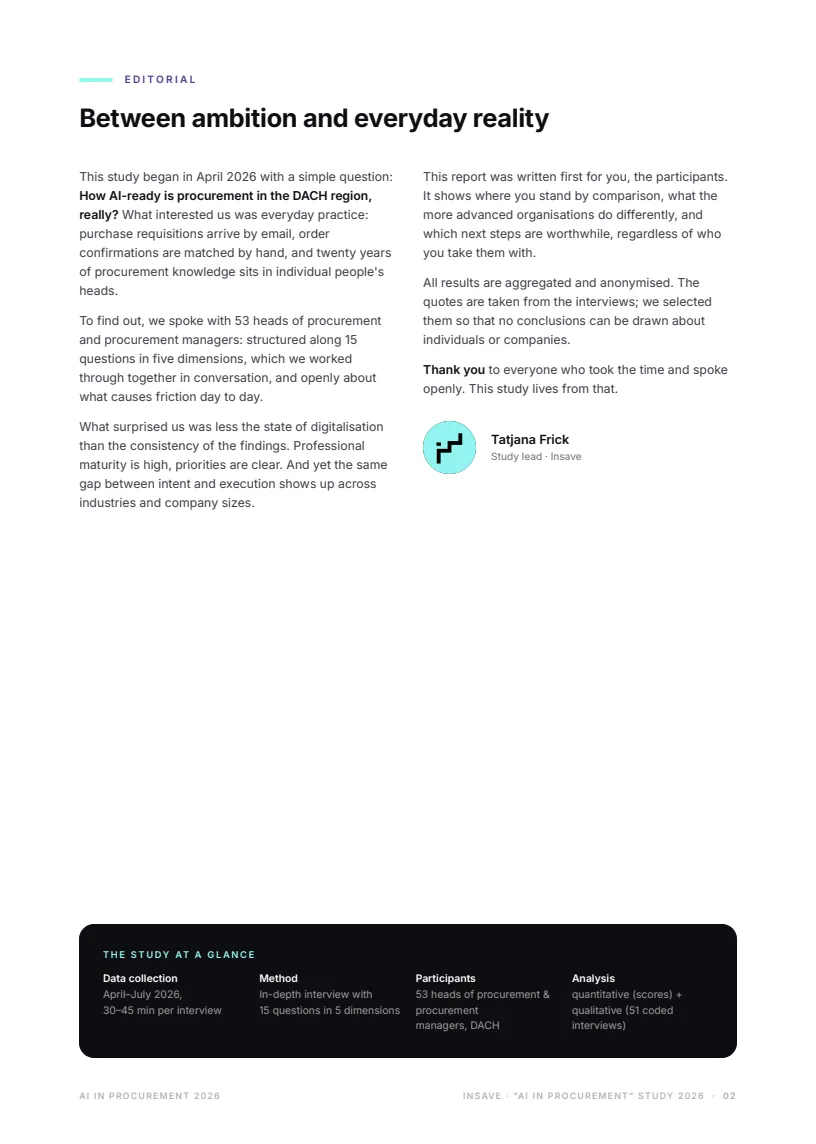
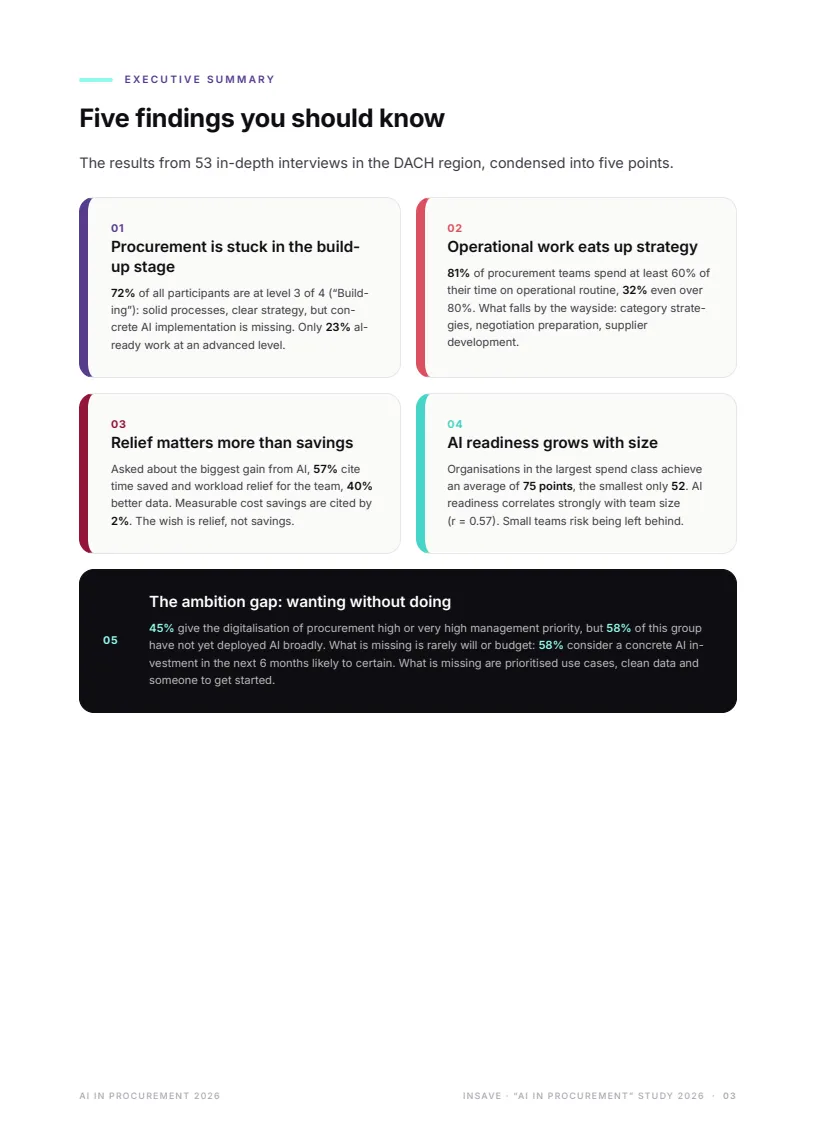
72%
Solid processes and a clear strategy are in place, but concrete AI implementation is missing.
81%
Operational work displaces category strategy, negotiation preparation and supplier development.
58%
Time saved and better data matter far more than a pure savings case.
57%
PDF-to-SAP ping-pong and media breaks are the most common pain point in the interviews.
16
Prioritised by time saved and implementation complexity, from quick wins to transformation.
Collected from April to July 2026 in 53 structured in-depth interviews. 15 questions across five dimensions, quantitative scores and 51 qualitatively coded conversations. All findings are aggregated and anonymised.
View the continuously updated study results →